



The global electric two-wheeler industry is in rapid iteration and expansion, with key trends emerging globally. This headline collection, in four categories, offers diverse options for various scenarios.

Section 1 - Latin America: Brazil's 145% Surge Marks a Structural Shift
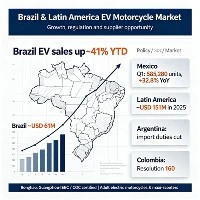
Brazil's electric motorcycle segment delivered its most emphatic statement yet in 2025, recording sales of just over 22,000 units - up 145% year-on-year, according to data from motorcyclesdata.com published in January 2026. This explosive growth comes against a broader backdrop of a booming Latin American two-wheeler market, which hit a new all-time record of 58.6M total motorcycle sales in 2025 - the fourth consecutive record year. While electric units still represent a small fraction of overall sales, the trajectory is unmistakable.

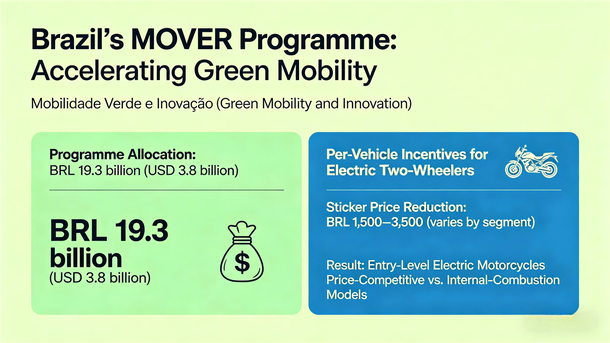
Brazil's government MOVER programme (Mobilidade Verde e Inovação), which allocated BRL 19.3 billion (approximately USD 3.8 billion) to accelerate green mobility, has been a key catalyst. Under MOVER, per-vehicle incentives for electric two-wheelers have reduced sticker prices by an estimated BRL 1,500–3,500 depending on segment, making entry-level electric motorcycles increasingly price-competitive against comparable internal-combustion models.
Colombia is also emerging as a complementary growth pocket. The country registered approximately 12,000 electric motorcycle deliveries in 2025, supported by local government initiatives in Bogotá and Medellín. At the regional level, IMARC Group projects the Latin American electric scooter market to grow from USD 2.7 billion in 2025 to USD 5.9 billion by 2034, reflecting a CAGR of around 9%. These numbers confirm that Latin America is no longer merely an emerging market for electric two-wheelers - it is becoming a genuine volume destination.

Section 2 - Middle East: Saudi Arabia Accelerates as Infrastructure Scales
The Middle East electric two-wheeler market is undergoing a quiet but consequential transformation in 2026. Saudi Arabia's electric scooter market reached USD 367.7 million in 2025, according to IMARC Group, and is forecast to more than double to USD 888.6 million by 2034 - a CAGR of approximately 10.3%. Meanwhile, Bonafide Research reports that Saudi Arabia's electric motorcycle segment is expected to grow at above 9% CAGR during 2026–2031, driven by urban mobility priorities and Vision 2030.

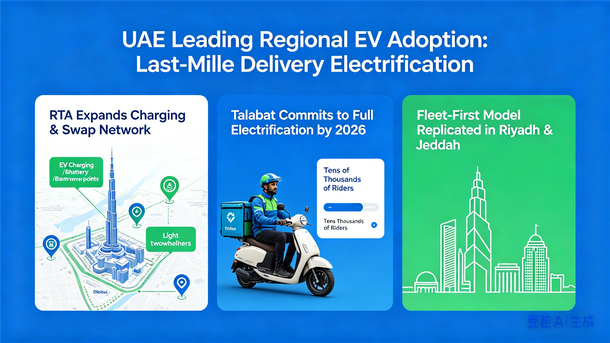
The UAE continues to lead regionally in adoption velocity. Dubai's Roads and Transport Authority (RTA) has been expanding its network of EV charging and battery-swap points specifically designed to accommodate light two-wheelers used in last-mile delivery. Talabat has publicly committed to full electrification of its Dubai delivery fleet by 2026, covering tens of thousands of riders. This fleet-first adoption model is now being replicated in Riyadh and Jeddah.
Saudi Arabia's recent regulatory updates have also simplified import documentation for electric two-wheelers, reducing time-to-market for foreign OEMs and SKD exporters by an estimated 30–45 days. For high-performance electric scooters, the Gulf market increasingly demands vehicles that can sustain 60–80 km/h in high-temperature environments, carry payload for delivery use cases, and operate reliably at ambient temperatures exceeding 45°C.

Section 3 - Africa: Infrastructure-Led Growth as Spiro Passes the $280M Mark
Africa's electric two-wheeler sector entered 2026 at an inflection point defined not by sales volume alone but by the scale and sophistication of its supporting infrastructure. Spiro, the continent's largest electric two-wheeler operator, passed a landmark milestone in late 2025: 60,000 e-bikes deployed across six countries and 1,500 battery-swap stations operational, with total funding exceeding USD 280 million - making its October 2025 USD 100 million raise the single largest investment in African electric two-wheel mobility to date (Marqstats, April 2026). Kenya's electric boda bodas have captured an estimated 14–17% market share of registered motorcycle deliveries in Nairobi.

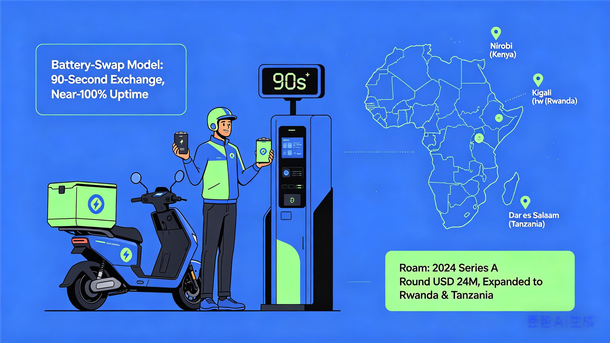
The battery-swap model allows commercial riders to exchange depleted batteries for fully charged ones in under 90 seconds, maintaining near-100% operational uptime. Roam, a Nairobi-based manufacturer, completed a USD 24 million Series A round in 2024 and has since expanded to Rwanda and Tanzania.
Ethicalbusiness.africa (February 2026) reported that Kenya's electric motorcycle revolution has reached a critical threshold - the point at which unit economics for commercial riders consistently outperform petrol counterparts without requiring subsidies. Nigeria is beginning to follow suit, with Lagos state-level pilot programmes introducing EV-preferential registration fees. Pan-African forecasters estimate the total African two-wheeler market at approximately USD 5 billion in 2025, growing at a CAGR exceeding 8% through 2030.

Durable Blue Electric Tricycle: Built for Commercial Hauling
