

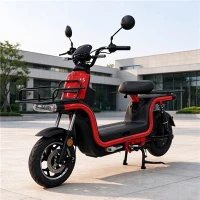
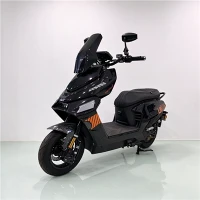
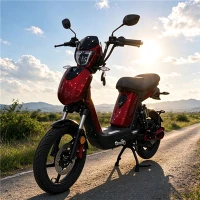

Pay attention to cleaning first, especially the salt water in winter (many cities spray salt water after heavy snow in winter to avoid freezing) in time, otherwise it will easily cause metal parts to rust and paint film aging and fall off. The second is to pay attention to the maximum adjustment height. After the new car has been riding for a period of time, the whole car should be inspected and adjusted according to the requirements of the manual. Tightening and lubrication are essential at this time. Check whether the fasteners are loose and whether the transmission parts are flexible. Pay attention to wipe off the slick oil after lubricating the chain, and just apply a little oil on the flywheel. The tires should be properly inflated, otherwise it will affect the comfort and service life of riding. The brakes are the basic guarantee for safety, and they should be checked at any time. As long as there are problems, they should be adjusted or repaired immediately.
1. Adjust the height of the saddle and handlebar before using the electric bicycle to ensure riding comfort and reduce fatigue. The height of the saddle and the handlebars should vary from person to person. Generally, the height of the saddle is suitable for the rider to reliably touch the ground with one foot (the whole car should be kept upright), and the height of the handlebar should be placed on the rider’s forearm and shoulders. It is appropriate to relax your arms. However, the adjustment of the saddle and the handlebar should first ensure that the insertion depth of the overtube and the stem must be higher than the safety mark line.
2. Before using the electric bicycle, check and adjust the front and rear brakes. The front brake is controlled by the right brake lever, and the rear brake is controlled by the left brake lever. The front and rear brakes should be adjusted so that they can brake reliably when the left and right brake handles reach half the stroke; the brake shoes should be replaced in time if they are excessively worn.
3. Check the tightness of the chain before the electric bicycle is used. If the chain is too tight, the pedal is laborious when riding, and it is easy to tremble and rub against other parts if the chain is too loose. The sag of the chain is preferably 1-2mm, and it can be adjusted properly when riding without pedals. When adjusting the chain, first loosen the rear wheel nut, screw in and out the left and right chain adjusting screws evenly, adjust the tightness of the chain, and re-tighten the rear wheel nut.
4. Check the lubrication of the chain before using the electric bicycle. Feel and observe whether the chain shaft of the chain rotates flexibly and whether the chain links are severely corroded. If it is corroded or the rotation is not flexible, add proper amount of lubricating oil, and if it is serious, replace the chain.
5. Before riding an electric bicycle, check whether the tire pressure, handlebar steering flexibility, front and rear wheel rotation flexibility, electrical circuits, battery power, motor working conditions, and lights, horns, fasteners, etc. meet the requirements for use.
(1) Insufficient tire pressure will increase the friction between the tire and the road, thereby shortening the mileage; it will also reduce the turning flexibility of the handlebar, which will affect the comfort and safety of riding. When the air pressure is insufficient, the air pressure should be added in time, and the tire pressure should be in accordance with the recommended air pressure in the "E-Bike Instruction Manual" or the specified air pressure on the tire surface.
(2) When the handlebar is not flexible in rotation, there are jams, dead spots or tight spots, it should be lubricated or adjusted in time. Lubrication generally uses butter, calcium-based or lithium-based grease; when adjusting, first loosen the front fork lock nut and rotate the front fork to the upper gear. When the handlebar rotation flexibility meets the requirements, lock the front fork lock nut.
(3) The front and rear wheels are not flexible enough to rotate, which will increase the rotational friction and increase the power consumption, thereby reducing the mileage. Therefore, in case of failure, it should be lubricated and maintained in time. Grease, calcium-based or lithium-based grease is generally used for lubrication; if the shaft is faulty, the steel ball or shaft can be replaced. If the motor is faulty, it should be repaired by a professional maintenance unit.
(4) When checking the circuit, turn on the power switch to check whether the circuit is unblocked, whether the connector is firmly and reliably inserted, whether the fuse is working properly, especially whether the connection between the battery output terminal and the cable is firm and reliable. If the fault is found, it should be eliminated in time.
(5) Before traveling, check the battery power, and judge whether the battery power is sufficient according to the mileage of the trip. If the battery is not enough, it should be properly assisted by human riding to avoid under-voltage operation of the battery.
(6) The working condition of the motor should also be checked before traveling. Start the motor and adjust its speed to observe and listen to the operation of the motor. If there is any abnormality, it should be repaired in time.
(7) Before using electric bicycles, check the lights, horns, etc., especially at night. The headlights should be bright, and the beam should generally fall in the range of 5-10 meters in front of the front of the car; the horn should be loud and not hoarse; the turn signal should flash normally, the steering indicator should be normal, and the light flashing frequency should be 75-80 times per minute; The display should be normal.
(8) Before traveling, check whether the main fasteners are fastened, such as the fasteners for the horizontal tube, the vertical tube, the saddle, the saddle tube, the front wheel, the rear wheel, the bottom bracket, the lock nut, the pedal, etc. It should not be loosened. If the fasteners become loose or fall off, they should be tightened or replaced in time. The recommended torque of each fastener is generally: 18N.m for the handlebar, handlebar, saddle, saddle tube, front wheel, and pedals, and 30N.m for the bottom bracket and rear wheel.
6. Try not to use zero starting (ie starting on the spot) for electric bicycles, especially at load-bearing and uphill places. When starting, you should ride with human power first, and then switch to electric driving when reaching a certain speed, or use electric assisted driving directly. This is because when starting, the motor must first overcome the static friction. At this time, the current is relatively large, close to or even reach the resistance current, so that the battery works with high current and accelerates the damage of the battery.
7. When riding an electric bicycle, try to use manual or electric assistance, especially when driving uphill, loading, driving in the wind, or on rough roads. In this way, the battery can be prevented from discharging with high current for a long time and damaging the battery, which is beneficial to increase the continuous mileage of a charge and prolong the service life of the battery.
8. Electric bicycles are not suitable for rough roads or steep slopes (usually ≤8°). If you encounter such roads, you should drive slowly or get out of the car. When driving on this kind of road, the working environment of the motor, controller, battery, etc. is poor, which will reduce the service life and be easily damaged.
9. When electric bicycles are driving, avoid frequent braking and starting. Before braking or at the same time, turn the speed control knob back into place, and try to use manpower to ride in the area supported by the road. In this way, the battery can be prevented from being damaged by high current during starting.
10. The standard load capacity of electric bicycles is 75 kg, and overloading should be avoided as much as possible. If you are driving with overload, you should use manual riding and manual assist.
11. When using an electric bicycle in cold weather, you should try to drive with manual or electric assist; and also pay attention to the battery power and voltage indications. In general, when the weather is cold, the depth of discharge of the battery should be appropriately reduced, and it must not be driven under voltage. This is because the charging capacity and discharging capacity of the battery are reduced when the weather is cold.
12. Electric bicycles are not afraid of rain and snow. However, the water level cannot exceed the lower edge of the electric wheel hub bearing seat when wading water to prevent damage to the motor caused by water ingress. After riding in rain or snow, wipe it off as soon as possible; if the electrical components are immersed in water, they should also be dried with a hair dryer. So as not to cause corrosion of iron parts, circuit leakage, short circuit and other faults.
13. When riding on rainy and snowy days, the driving speed should be appropriately reduced. When braking, pay attention to increasing the braking distance to prevent sideslip and turning around, so as not to endanger personal safety.
14. Electric bicycles should be protected from long-term sunlight exposure, and should be stored in a cool place. Sunlight exposure will accelerate the aging of paint, plastic parts, rubber parts and electronic components, reducing their service life and reliability.
15. When charging the battery, you should use the charger of the matching or manufacturer's designated model. Do not mix; when charging, the battery and the charger should be placed in a ventilated and cool place, placed securely, and should be kept away from flammable and explosive materials, and avoid high temperature, humidity and water. , It is forbidden to cover with objects, and it is forbidden to reach by infants and children. When charging, you should first confirm that the grid voltage and frequency meet the requirements of the charger, and then connect the battery to the charger output terminal, and the charger input terminal to the grid; after the charging is completed, disconnect the grid first, then disconnect the charger and the battery Connection. It usually takes 6-8 hours to charge a lead-acid battery.
16. When the battery reaches the under-voltage state, stop using it and charge it as soon as possible. It is forbidden to use the battery's rising voltage, and it is forbidden to use the battery's deep discharge and over-discharge. It is best to charge as it is used, so that it is always in a high current state. It is recommended to charge it at least once a day.
17. The storage battery should be placed in a cool place with moderate air humidity. The storage battery should be kept upright; it should be fully charged and recharged regularly for long-term storage. Generally, it should be charged once a month. Lead-acid batteries can be stored for a long time, and a few drops of distilled water can be added to offset the evaporation of water and reduce the vulcanization of the plates.
18. The first time you use an electric bicycle, you should read the "Instruction Manual" carefully to understand the performance of the electric bicycle. Don't lend it to people who don't know how to ride an electric bicycle.
19. Mental patients, alcoholics, and other disabled persons who are not suitable for riding are prohibited from using electric bicycles; people with heart disease, epilepsy, and color-blind people should be cautious when riding.
20. Electric bicycles are non-motorized vehicles. When riding, they should abide by traffic rules and drive on non-motorized vehicle lanes or local lanes.
21. Electric bicycles should be stored in a cool, ventilated, dry place, away from corrosive liquids and gases; when storing, the whole vehicle should be upright with sufficient tire pressure; no heavy objects should be loaded on the vehicle body; and the battery should be stored separately.